上古卷轴5:重置版MOD 武装剑天际HD 1_15a
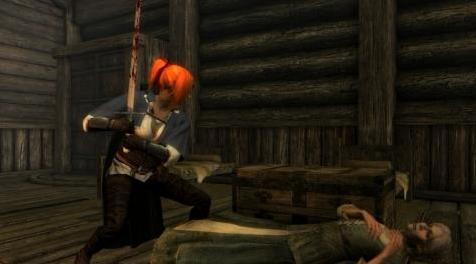
MOD介绍:
它能做什么
它增加了一些来自欧洲中世纪的正宗大刀,因为,嘿,它是中世纪的;)
由于平衡原因,这些武器大致相当于贝塞斯达类似的钢制武器,并且可以作为钢制武器精制而成。单手汉的基础伤害比Akaviri Katana或Redguard Fachion略好。这会使暴击加成伤害加倍,并且有一倍的暴击几率。也就是说,它们在你得到它们的早期阶段是强大的,但实际上比你在更高级别找到的相当普通的东西弱。乌木在基础伤害中击败了他们,而Daedric在任何方面都击败了他们。
请注意,这不是对欧洲和日本剑的某种评论。我非常喜欢他们,两人都做得很好。我选择这一点纯粹基于以下考虑因素:(A)我希望我的武器在比赛结束时至少仍具有竞争力,但(B)并不比其他钢制武器更强大。也就是说,我认为可以想象你可以制造一种比其他钢制武器好一点的钢制武器,但是我不想超过这一点,以至于最终会争论你是否绝对需要幻想材料。 。
这两个人的平衡基本上是通过将基础伤害扩大到比双手一样的香草游戏,与同一材料的单一投手相比,但使它们稍微快一点。它们的触及范围也略低于其他两个观察者。原因是这些更像是早期的混蛋剑(实际上,它们实际上在当时被称为“混蛋之剑”,因为这是一个超出正常大小范围的剑的术语)而不是真正的两个人。
所有声明的类型都是Oakeshott剑型,我可以判断剑的类型。请记住,虽然剑没有相同,但当时没有购买“X型”剑的东西。几个世纪以来,整个大陆都有成千上万的铁匠,他们生产的剑也几乎无限变化。因此,如果我的X型比X型短半英寸,那么请耐心等待。
这些鞋子的手柄上有黑色皮革,也有
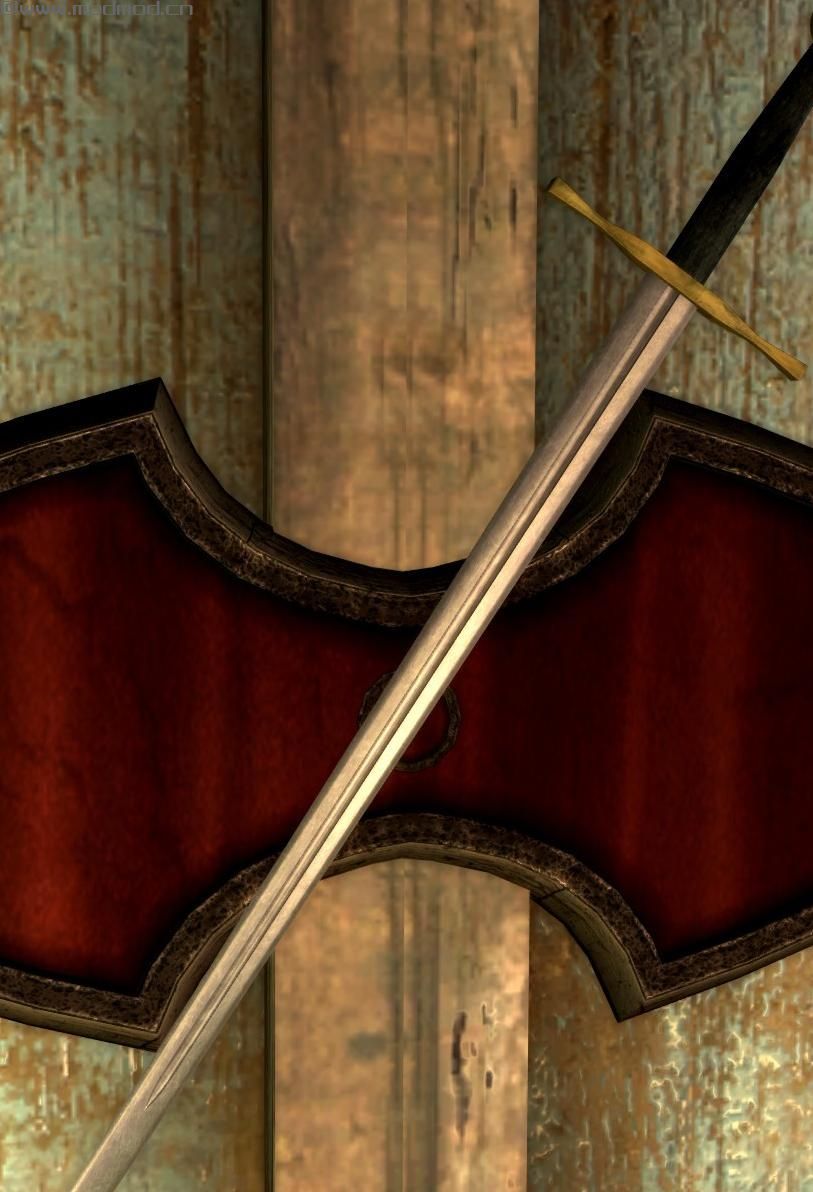
A)十字架和鞍头上有光泽但有光泽的黄色金属。选择黄铜,青铜或镀金钢。虽然我们没有中世纪黄铜柄的例子(但我们从文艺复兴时期开始),但在为贵族和国王制作的剑柄上有一些“火镀金”镀金的例子。当代艺术中也有hilts黄色金属的证据,但我们不知道它应该是黄铜,青铜还是黄金。要么
B)只是普通的旧灰色闪亮钢或铁。
只需在游戏中选择您想要使用或制作的那些。同一武器的变种之间没有统计差异。
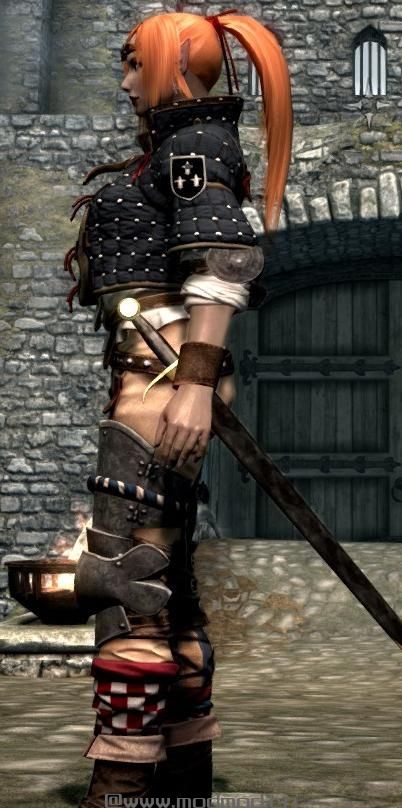
所有剑都有定制刀鞘,完全符合刀片的形状。它们被皮革覆盖,就像大多数中世纪刀鞘一样,并且在金属部件(例如,chape)上具有与hilts相同的金属。即,当护套时,刀鞘应该与刀柄匹配。
所有剑都可以使用钢,木柴(手柄和刀鞘)和皮革条制作。
如果我们假设人类大约5'10“高,则所有规定的尺寸都反映在网格中。
剑是:
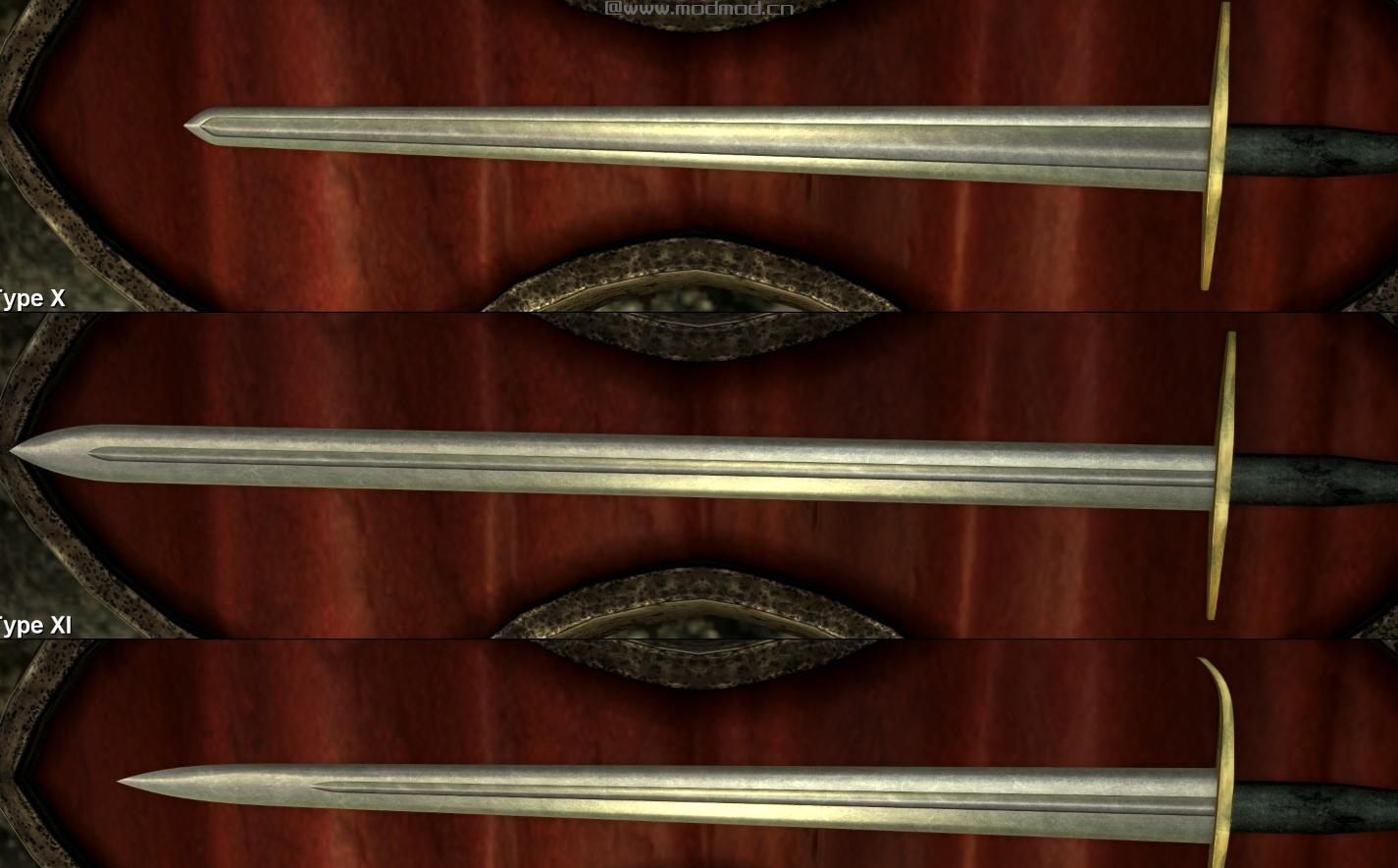
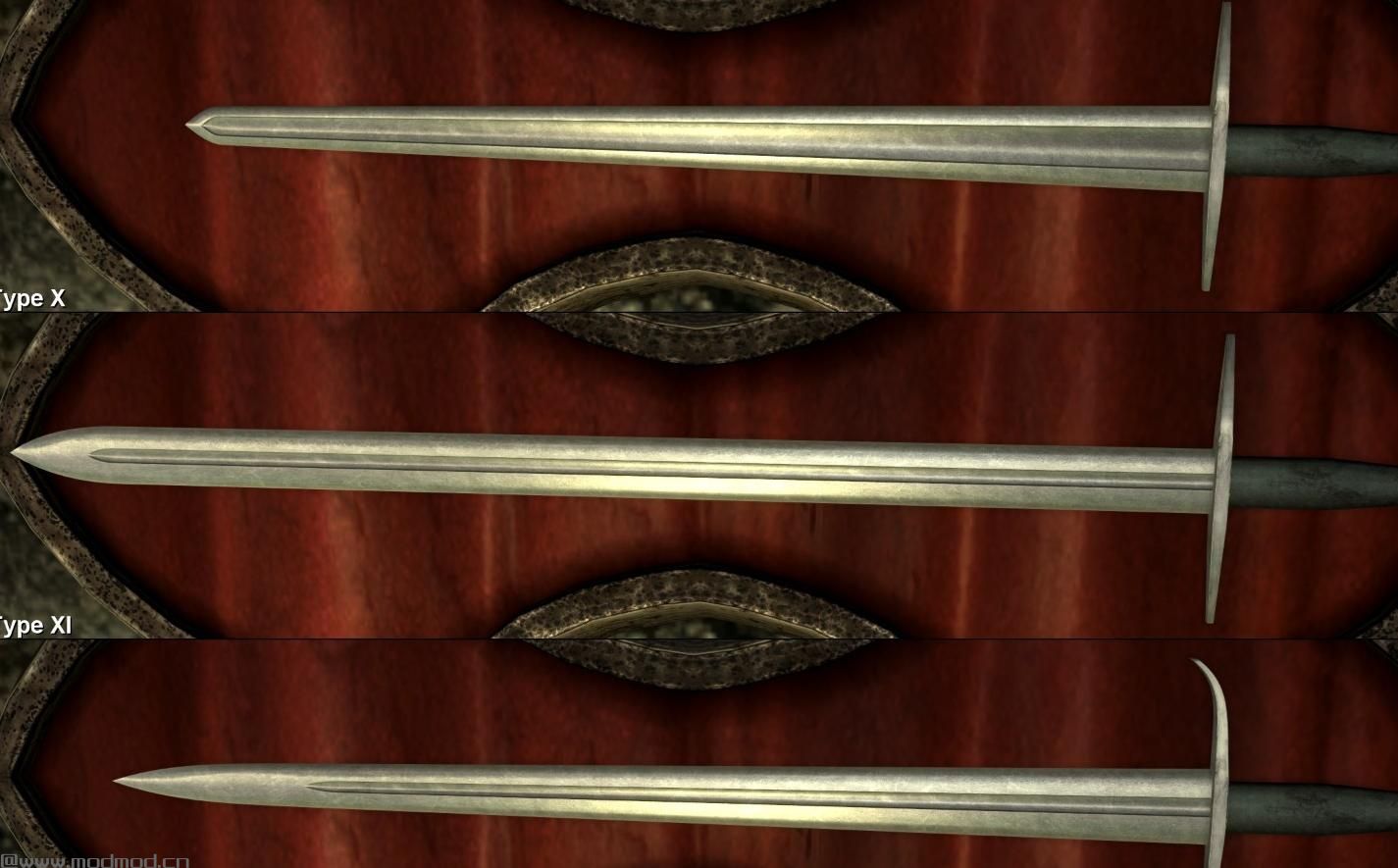
1. X型:切割剑,具有平庸的尖端,非常类似于早期的维京剑。它非常宽阔,宽阔而浅浅。该刀片长约30英寸,底部宽2.4英寸,但在开始收敛到尖端之前逐渐减小到约一半。更常见的是巴西坚果鞍头,虽然圆盘pommels也是历史。北欧穗状刀柄交叉变种。
2.类型XI:它更纤细,具有平行边缘和更好的尖端。它有一个约36英寸长的刀片(这些是骑兵剑),大部分长度为1-3 / 4英寸宽。更常见的是巴西坚果鞍头,虽然圆盘pommels也是历史。北欧穗状刀柄交叉变种。
3. XII型:另一把锥形剑,虽然没有后来的XIV型那么尖锐,并且具有非常好的穿刺尖端。它的刀片长约32-1 / 2英寸。它在刀柄处开始2.1英寸,但它从那里明显逐渐变细。对于这种类型来说,更充分的是漫长的,但不是非历史性的。
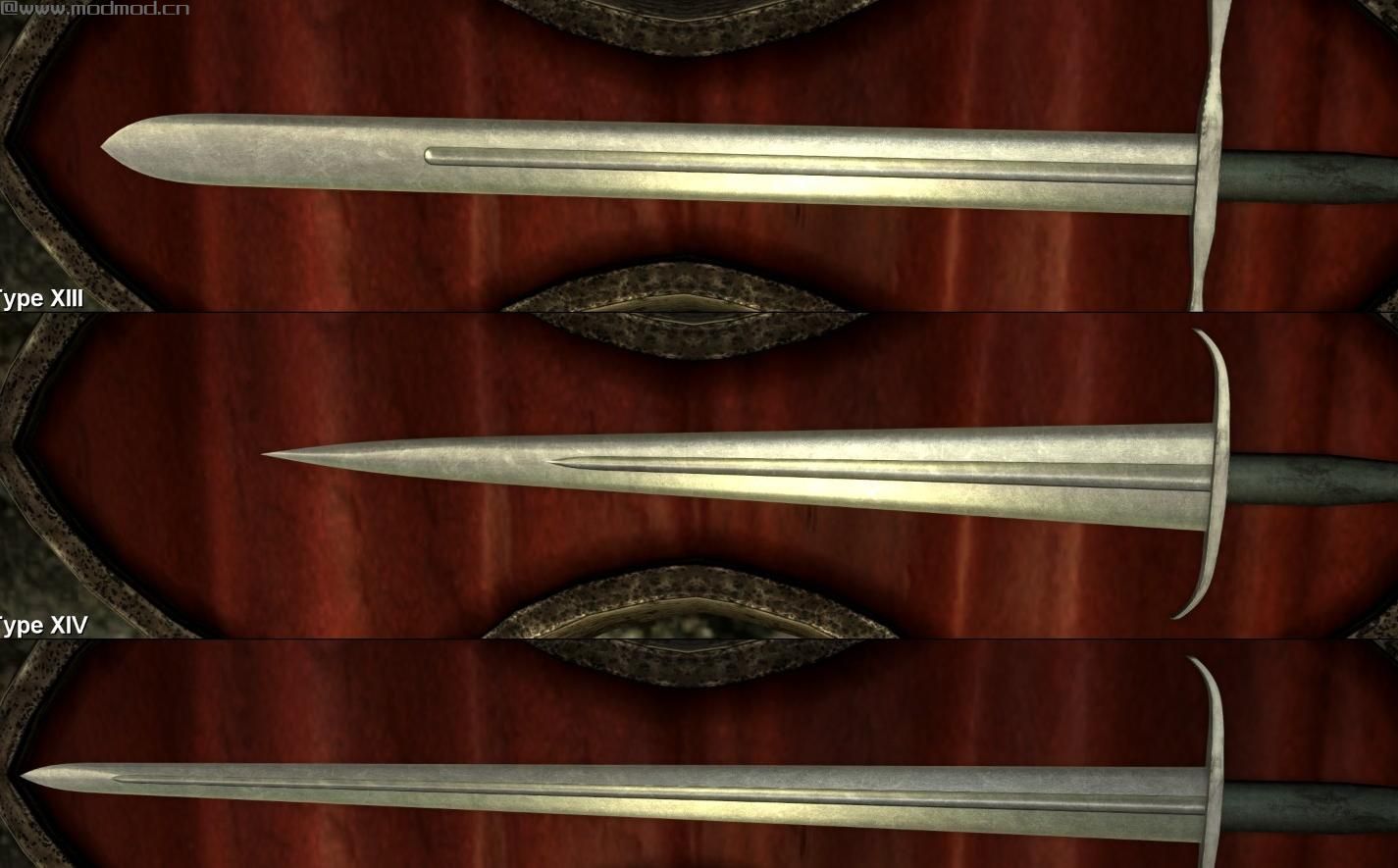
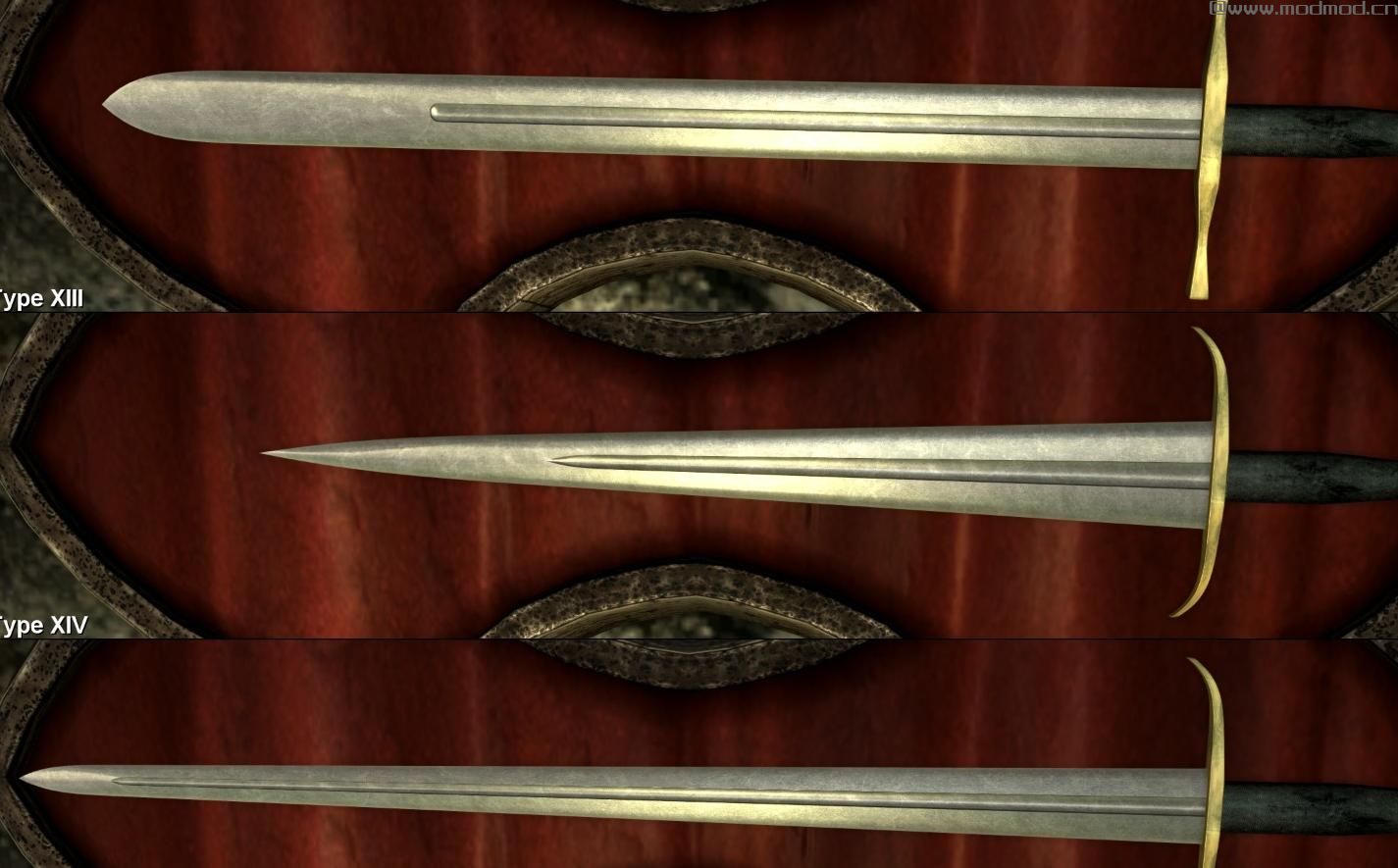
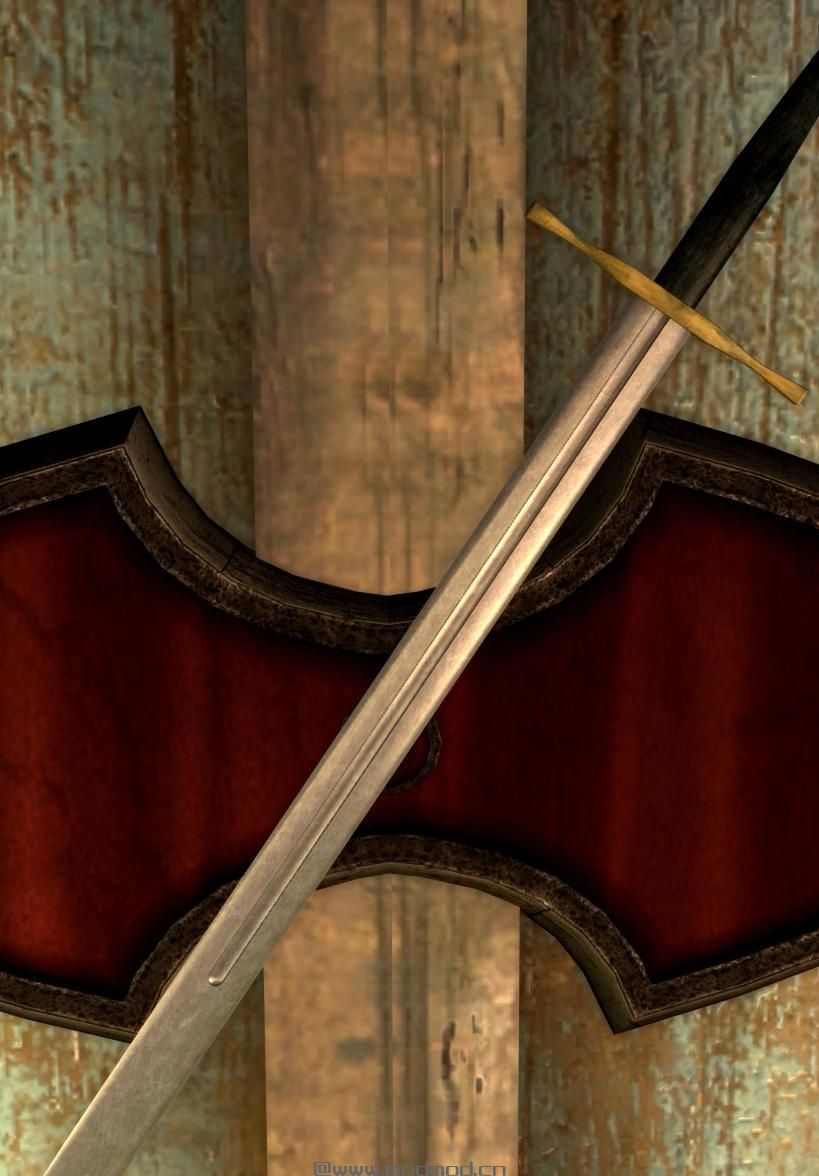
4.类型XIII:类型XIII不是类型XII的延续,而是平行演化,考虑到不同的哲学。虽然XII型正朝着穿孔方向发展的方向发展,但是XIII型基本上允许更大的撞击边缘,通过使刀柄足够长以允许在需要时在鞍头上使用秒针。即,这些是欧洲第一把手半剑。这个特殊的例子在其大部分长度上具有2-1 / 4英寸宽的刀片,并且具有大约32-1 / 2英寸长,并且对于这种类型具有相当典型的更宽的长度。
5. XIV型:扁平刀片,整个3英寸宽,但从刀柄向尖锐的尖端逐渐变细。大约27-3 / 4英寸长。对于这种类型而言,单一的更充分有点偏长,但它仍处于历史范围内。
奖金SWORDS
该模型最初的目的是严格地为A组武装剑,但最终它增长到包括晚于高中世纪或双手或两者的剑,因此这些天往往不被归类为武装剑。他们是:
6.类型XV:具有非线性远端锥形的刚性中空磨削刀片,其在尖端处从刀片转变为尖钉。在刀柄处开始2.2英寸宽。约29英寸长的刀片。
7.类型XVa:XV型的长剑版本,刀片更长更窄。刀片长约36.5英寸,刀柄宽仅2英寸。 (这实际上使它成为这种类型中较宽的一种。)尖端是一个更加恶劣的尖峰。
8.类型XVIIId:这是XIV型的中世纪晚期孙子的平均值。金刚石切片约35.5英寸长。它在刀柄处开始2.1英寸,但它从那里明显地逐渐变细到尖锐的尖端。与其他XVIII型变体不同,XVIIId的长度更长,几乎占据了刀片的所有长度。我的刀片实际上是略微凸起的,但仍然主要是钻石截面刀片,如XVIIId的一些类型。
9.类型XIIa:它基本上是XII型,带有38-7 / 8英寸刀片和适当的双手握把。这些是早期双手剑,改进的刺穿品种。
10.型号XIIIa:它基本上是XIII型,带有38-7 / 8英寸刀片和适当的双手握把。这些是早期双手剑,改进了切割品种。
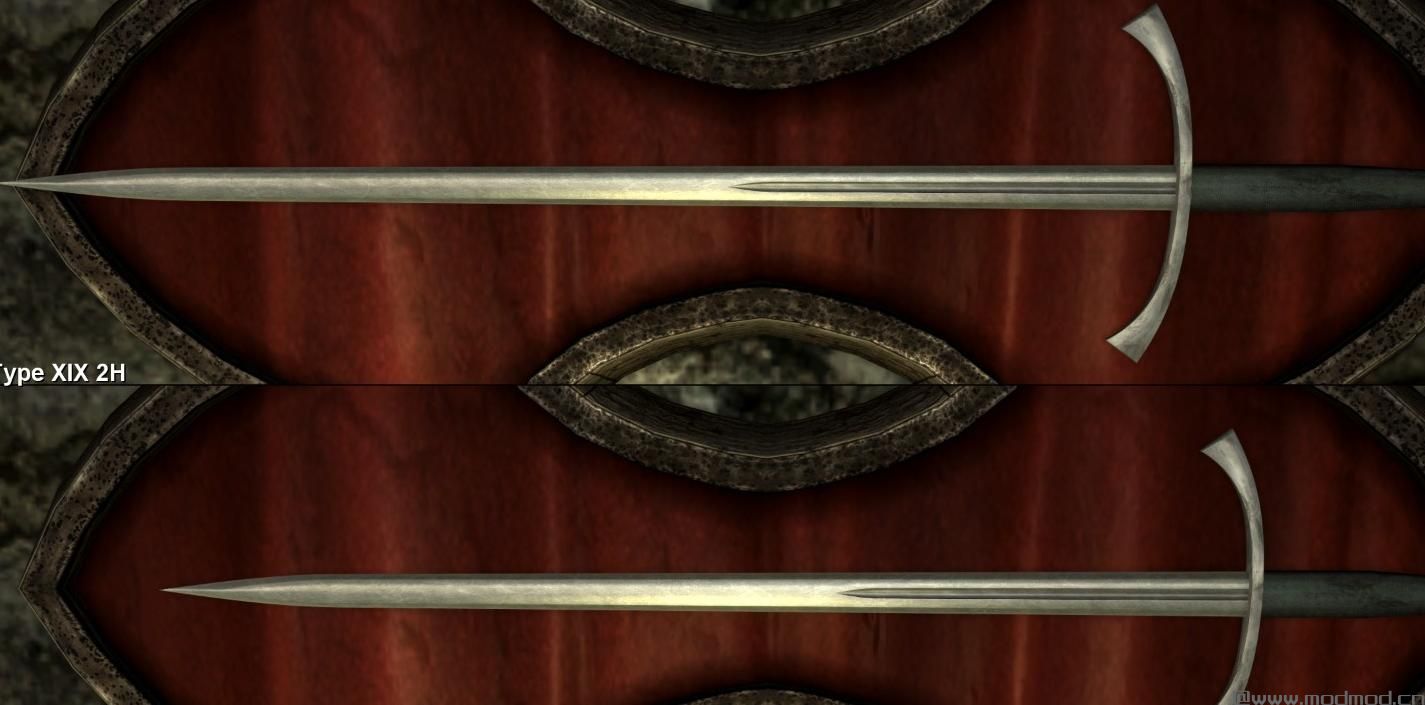
11.类型XIX 2h:中世纪晚期细长的手半剑,从尖端到十字架测量约36英寸的六角形截面刀片。 (没有历史类型XIX比那更长。)刀片开始大约1-3 / 8英寸宽并逐渐变细到大约1英寸,然后开始收敛到一个致命的尖端。富勒只运行刀片的上三分之一,就像大多数历史类型XIX一样。典型的爱尔兰盖玻片柄,带开口环形鞍头。宽松地基于Albion的Gallowglass剑再现。更长的抓地力,适合Skyrim的2小时动画。对于镀黄金属版本,通过环形圆头可见的刀片柄脚仍为普通的非镀灰钢。
12.键入XIX 1h:与上面相同的剑,但转换为具有较短抓地力的单手(虽然您实际上仍然可以用左手抓住鞍头)并且只有33英寸长的刀片。
回归和修改
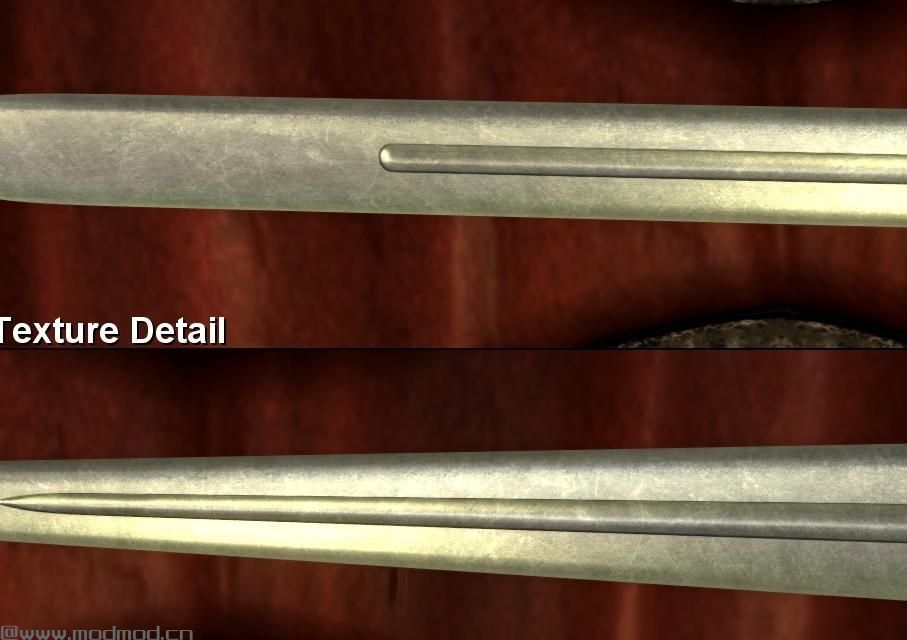
作为我的大多数mod,它的设计便于重新构造,因此纹理是独立的部分,并且映射使得您可以交换其他材料。基本上,如果你有任何其他金属表面的照片,只要它的宽度和高度(256,512,1024,2048或4096)的像素为2像素,你可以换掉它并有一个刀片你选择的金属。同样适合十字架。因此,如果你想要生锈的刀片或铜十字架或其他任何东西,你可以帮助自己。
从1.10开始,它们也使用简单的正交投影作为展开,因此如果可以绘制纹理,它应该会带来很小的麻烦。
网格片也是分开的,有点像无冬之夜2,所以如果你不想在NifSkope中复制节点,你可以混合搭配。你可以根据自己的需要更换刀片,十字架,小腿,pomme等,其中包括我的其他武器包中的碎片。把它们想象成乐高剑,基本上;)
如何获得它
在Bleak Falls Barrow,或者更具体地说是在Bleak Falls Sanctum地区,所有武器和变体都有一个箱子。所以,是的,你可以很早就得到它。它将位于圆形房间,中间有一个篝火,就像您进入右侧的Bleak Falls Sanctum一样。它将被锁定,虽然它是一个新手级锁,所以你不需要任何技能来打开它。不过,带上一两个锁针。一段时间后,箱子也响了。
或者制作它们。这将需要钢铁锻造,因为它们是钢制武器。
或者调出控制台,输入“help arming”(不带引号)来查看id,并通过player.additem命令给自己想要的那个。
如何安装它
使用目录在“Data”文件夹中提取存档。在启动器的插件文件列表中选择它。
如何重新安装它
从Data目录中删除.esp文件。
删除Meshes \ Weapons和Textures \ Weapons目录中的MArmingSword目录。
冲突
它几乎不应该与任何东西发生冲突。有可能另一个mod在箱子顶部放置了其他东西,但你仍然可以制作它们或者通过控制台让它们无论如何。
执照
我在公共领域发布它。你可以用它做任何你想做的事情。当然,如果你给予信任,我会很感激,但如果没有,那就这样吧,我也可以忍受。
版本史
1.15A:
固定了切线,因此剑也在Skyrim SE中正确渲染。
1.15:
添加了XV和XVa类型
1.14:
添加了1小时和2小时类型的XIX爱尔兰Gallowglass剑。
1.13:
针对错误关键字的双手修复错误
1.12:
Shinier刀片。它应该是抛光钢。
灰色的hilts手柄上有轻微的皮革。
所有剑上都有更好的血网。
1.11:
新的hilts,更好的圆盘pommels,更厚的手柄和更大的十字架
再次调整刀片厚度(我忘记了.nif内部的缩放,所以现在它们有点太厚了。)
使得刀鞘变得稍微厚一点。
将铁刀剑合并到主mod中,这样你就可以在游戏中选择你想要使用的剑,而不是将mod下载到mod。
为那些不能或不会制造钢铁的人添加箱子。
1.10:
适用于所有刀片的全新纹理
新纹理解开。在尖端没有更多的纹理和血液拉伸。
将厚度固定为历史(我错误地计算了从英寸到游戏单位的厚度转换)
去除了边缘的刻痕,因为香草游戏剑没有那些
刀片上的血液更好看
更少的多边形
1.09:
在那里将会有流血! ;)
使折叠的金属质感更加明显,所以现在我可能会对塑料看起来更少投诉
1.08:
添加了两个人
使把手大约三分之一。手上应该更舒服;)
1.07:
修复了在制作菜单中以错误的默认角度显示它们的问题
从X型中移除了忽略的阻力,它不应该这样做
1.06:
修复了XII,XIV和XVIIId类型上严重导入的刀片(只有刀片太小了5%)
1.05:
第一次天际释放
——————————————————————————————————————————————————————————
WHAT IT DOES
It adds a couple of authentic broadswords from the European High Middle Ages, because, hey, it's medieval out there ;)
The weapons roughly equal Bethesda's similar steel weapons in weight, for balance reasons, and can be crafted and tempered as steel weapons. The single-handers are marginally better in base damage than the Akaviri Katana or the Redguard Fachion. The do double the crit bonus damage, and have double chance to crit. I.e., they ARE powerful for the early point when you can get them, but actually weaker than fairly ordinary stuff you'd find at higher levels. Ebony beats them in base damage, and Daedric beats them in any aspect.
Note that this is NOT some kind of comment on European vs Japanese swords. I like them both, and both did a fine job of killing people. I chose that point based purely on the considerations that (A) I want my weapons to still be at least competitive at the end of the game, but (B) not much more powerful than other weapons made of steel. I.e., I think it's conceivable that you can make a steel weapon a little bit better than other steel weapons, but I didn't want to exceed that so much as to end up in arguments about whether you'd absolutely need fantasy materials for that.
The two handers are balanced basically by scaling the base damage to a little less than a vanilla game two-hander would do, comparable to a single hander of the same material, but making them marginally faster. They also have slightly less reach than the other two handers. The reason is that these are more like early bastard swords (in fact, they would actually be called "bastard sword" at the time, as that was a term for a sword outside of the normal size ranges) than true two handers.
All stated types are the Oakeshott sword types, in as much as I can judge what type a sword is. Bear in mind though that swords were not made identical, and there was no such thing as buying a "Type X" sword at the time. There were thousands of smiths across a whole continent and across several centuries, and pretty much infinite variation in the swords they produced. So if my Type X is half an inch shorter than your Type X, well, please bear with me.
The hilts have dirty-ish black leather on the grip, and either
A) tarnished but shiny yellow metal on the cross and pommel. Take your pick between brass, bronze or gold-plated steel. While we don't have examples of brass hilts from the middle ages (but we do from the Renaissance), there are examples of "fire gilt" gold-plating on the hilts of swords made for nobles and kings. There is also evidence of yellow metal on hilts in contemporary art, but we do not know if it was supposed to be brass, bronze or gold. Or
B) just plain old grey shiny steel or iron.
Just choose in game which of those you want to use or craft. There is no stats difference between variants of the same weapon.
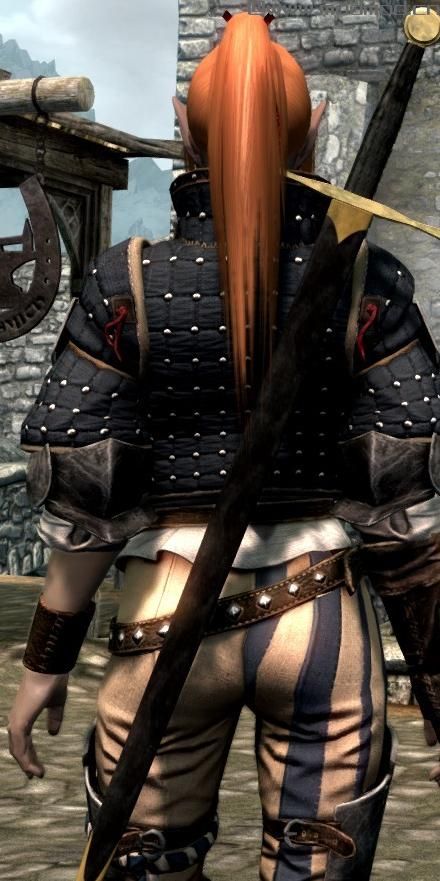
All swords have custom scabbards that exactly fit the shape of the blade. They're covered in leather, as was the case for most medieval scabbards, and have the same metal on the metal parts (e.g., the chape) as the hilts. I.e., when sheathed, the scabbard should match the hilt.
All swords can be crafted using steel, firewood (for the handle and scabbard) and leather strips.
All stated sizes are reflected in the mesh, if we assume humans to be about 5'10" tall.
The swords are:
1. Type X: Cutting sword, with a mediocre tip, very similar to the earlier Viking swords. It is very broad, with a wide and shallow fuller. This blade is about 30 inches long and a whole 2.4 inches wide at the base, but tapers to about half that before starting to converge into a tip. More commonly had a Brazil Nut pommel, though disc pommels are historical too. Norse spike-hilt cross variant.
2. Type XI: It is more slender, with parallel edges, and a better tip. It has a blade about 36 inches long (these were cavalry swords) and 1-3/4 inches wide for most of its length. More commonly had a Brazil Nut pommel, though disc pommels are historical too. Norse spike-hilt cross variant.
3. Type XII: Another tapering sword, although not as acutely as the later Type XIV, and with a very good piercing tip. It has a blade about 32-1/2 inches long. It starts 2.1 inch at the hilt, but it tapers visibly from there. The fuller is long for this type, but not ahistorical.
4. Type XIII: The Type XIII is not a continuation of Type XII, but a parallel evolution, with a different philosophy in mind. While the Type XII was evolving in the direction of becoming better at piercing, the Type XIII essentially allowed harder hits with the edge, by having a hilt long enough to allow using a second hand on the pommel if needed. I.e., these are the first European hand-and-half swords. This particular example has a 2-1/4 inch wide blade for most of its length, and about 32-1/2 inch long, and with a fairly typical fuller length for this type.
5. Type XIV: Flat blade that starts a whole 3 inch broad, but tapers strongly right from the hilt, to a very sharp tip. About 27-3/4 inches long. The single fuller is somewhat on the long side for this type, but it's still in the very historical range.
BONUS SWORDS
The mod was originally intended to be strictly Group A arming swords, but eventually it grew to include swords which are later than the high middle ages or are two-handed or both, and thus tend to not get classified as arming swords these days. They are:
6. Type XV: stiff hollow ground blade with a non-linear distal taper, that transforms from blade to spike at the tip. Starts 2.2 inch wide at the hilt. About 29 inch long blade.
7. Type XVa: a longsword version of the Type XV, with a longer and slightly narrower blade. Blade is about 36.5 inches long, and only 2 inches wide at the hilt. (Which actually makes it one of the wider ones of this type.) The tip is an even nastier spike.
8. Type XVIIId: this is kinda the mean, late medieval grandson of the Type XIV. Diamond-section blade about 35.5 inches long. It starts 2.1 inch at the hilt, but it tapers visibly from there to a nasty tip. Unlike the other Type XVIII variants, the XVIIId has a long fuller, going almost all the length of the blade. My blade is actually very slightly convex, but still mostly a diamond section blade, as some of the type XVIIId were.
9. Type XIIa: It's basically the Type XII with a 38-7/8 inch blade and a proper two-handed grip. These are early two-handed swords, of the improved piercing variety.
10. Type XIIIa: It's basically the Type XIII with a 38-7/8 inch blade and a proper two-handed grip. These are early two-handed swords, of the improved cutting variety.
11. Type XIX 2h: A late-medieval slender hand-and-half sword, with an about 36 inch hexagonal-section blade measured from tip to cross. (No historical type XIX is longer than that.) Blade starts about 1-3/8 inches broad and tapers to about 1 inch before starting to converge into a deadly tip. Fuller only runs the upper third of the blade, as usual for most historical type XIX. Typical Irish gallowglass hilt, with an open ring pommel. Loosely based on Albion's Gallowglass sword reproduction. Longer grip, to fit Skyrim's 2h animations. For the yellow metal plated version, the blade's tang, visible through the ring pommel, is still plain non-plated gray steel.
12. Type XIX 1h: Same sword as above, but converted to a one-hander with a shorter grip (though you could realistically still grab the pommel with your left hand) and only 33 inch long blade.
RETEXTURING AND MODDING
As most of my mods, it's designed for ease of retexturing, so the textures are separate pieces, and the mapping such that you can just swap in some other material. Essentially, if you have any other photo of a metal surface, as long as it's a power of 2 in pixels for width and height (256, 512, 1024, 2048 or 4096), you can just swap it in and have a blade in the metal of your choice. Ditto for the cross. So if you want a rusty blade or a copper cross or whatever, you can help yourself.
As of 1.10 they also use a simple orthogonal projection as an unwrap, so it should pose very little trouble if you can paint a texture.
The mesh pieces are separate too, somewhat like in Neverwinter Nights 2, so if you're not affraid to copy nodes around in NifSkope, you can mix and match. You can swap blades, crosses, hilts, pommels, etc, around as you see fit, and that includes pieces from my other weapon packs. Think of them as Lego swords, basically ;)
HOW TO GET IT
There is a chest with all weapons and variants down in Bleak Falls Barrow, or more specifically in the Bleak Falls Sanctum area. So, yeah, you can get it VERY early. It'll be in the round-ish room with a campfire in the middle, just as you enter Bleak Falls Sanctum, on your right. It WILL be locked, although it is a novice level lock, so you need no skill whatsoever to open it. Still, bring a lockpick or two. The crate respwans too, after a while.
Or craft them. This WILL need the steel smithing perk, since they ARE steel weapons.
Or bring up the console, type "help arming" (without the quotes) to see the ids, and give the one you want to yourself via the player.additem command.
HOW TO INSTALL IT
Extract the archive, with directories, in your "Data" folder. Select it in the list of plugin files in the launcher.
HOW TO UNINSTALL IT
Delete the .esp file from your Data directory.
Delete the MArmingSword directory in both the Meshes\Weapons and Textures\Weapons directories.
CONFLICTS
It shouldn't conflict with almost anything. It's possible that another mod places something else on top of the crate, but you should still be able to craft them or get them through the console anyway.
LICENSE
I release it in the public domain. You can do anything you wish with it. I would, of course, appreciate it if you give credit, but if not, so be it, I can live with that too.
VERSION HISTORY
1.15a:
Fixed the tangents so the swords render right in Skyrim SE too.
1.15:
Added the type XV and XVa
1.14:
Added the 1h and 2h type XIX Irish Gallowglass swords.
1.13:
Bug fix for the two-handers having the wrong keywords
1.12:
Shinier blades. It IS supposed to be polished steel.
LESS shiny leather on the grip of the grey hilts.
Slightly better blood mesh on all swords.
1.11:
New hilts, with nicer disc pommels, thicker grips, and larger crosses
Tweaked the blade thickness again (I had forgot about the scaling inside the .nif, so now they were a little bit too thick.)
Made the scabbards a tiny little bit thicker.
Merged the iron-hilt swords into the main mod, so you can just choose in game which ones you want to use, instead of downloading a mod to a mod.
Addded the crate for people who can't or won't craft steel.
1.10:
New, better textures for all blades
New texture unwrap. No more texture and blood stretching at the tip.
Fixed the thickness to be historical (I had mis-calculated the conversion from inches to game units for thickness)
Removed the nicks in the edge, since vanilla game swords don't have those
Better looking blood on the blades
Less polygons
1.09:
There Will Be Blood! ;)
Made the folded metal texture a little bit more obvious, so maybe now I'll get less complaints about looking like plastic
1.08:
Added the two-handers
Made the grips about one third thicker. Should be more comfortable on the hands ;)
1.07:
Fixed the problem of their being shown at a wrong default angle in the crafting menu
Removed the ignoring resistances from the Type X, it was not supposed to do that
1.06:
Fixes the badly imported blade on the types XII, XIV and XVIIId (only the blade was 5% too small)
1.05:
First Skyrim release
演示截图:
资源查找:
最新文章
点击热榜
推荐问答
- [问答]情商课一般几岁孩子去学比较好?
- [问答]怎么看自己孩子情商低不低?孩子情商低的10大特征是真的吗?
- [问答]我想提高情商和说话要看什么书?
- [问答]顾三月情感课程pdf谁有?
- [问答]谁有情感培训课程资源?
- [问答]如何看卖情感课程正规还是不正规?
回复区
昵称:
邮箱:
内容: